
Clean Architecture
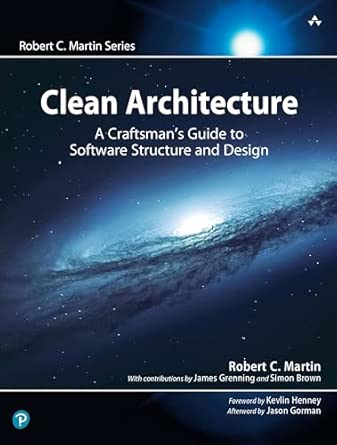
Robert C. Martin
A pragmatic toolbox for building maintainable systems — as long as you don’t treat it like a religion.
Clean Architecture is less about diagrams and frameworks and more about how to think when structuring software. Robert C. Martin distills decades of experience into a clear message: protect your business logic, draw strong boundaries, and keep your system independent from tools, frameworks, and delivery details.
At its best, the book is a pragmatic guide to long-term maintainability. The dependency rule, separation of concerns, and emphasis on architectural boundaries are timeless ideas that genuinely help teams build systems that survive change.
That said, the book often crosses the line from guidance into dogma. Principles are presented as absolutes, with little acknowledgment of trade-offs, context, or modern development constraints. If taken too literally, Clean Architecture can lead to unnecessary abstraction and ceremony — especially in small or fast-moving projects.
The real value of this book isn’t in following its rules to the letter, but in using them as a thinking framework. Read it critically, steal the principles that make sense for your context, and leave the rest behind.
Who should read it: experienced developers, software architects, and team leads who want a solid mental model for building maintainable, long-lived systems — and are willing to think critically rather than follow rules blindly.