
Nine Lies About Work
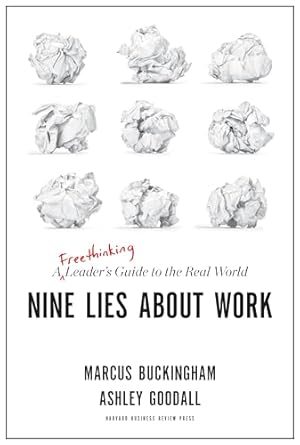
Ashley Goodall, Marcus Buckingham
Most management “best practices” are built on false assumptions about people, performance, and organizations—and they actually make work worse instead of better.
Proof That Corporate Bullshit Is Timeless
Nine Lies About Work dismantles the myths modern management is built on: that feedback, ratings, cascading goals, and well-rounded employees drive performance. Instead, it argues that people thrive in strong teams, playing to their strengths, guided by real coaching rather than bureaucratic systems. The book’s uncomfortable message is that most HR and management practices are not just ineffective—they’re based on fundamentally wrong assumptions about how humans actually work.
1) “People care which company they work for.”
➜ Reality: People care more about their team and manager than the brand.
2) “The best plan wins.”
➜ Reality: Execution and adaptability matter more than perfect planning.
3) “The best companies cascade goals.”
➜ Reality: Top-down objectives rarely translate into meaningful day-to-day work.
4) “The best people are well-rounded.”
➜ Reality: High performers succeed by amplifying strengths, not fixing weaknesses.
5) “People need feedback.”
➜ Reality: Traditional feedback systems are biased and often demotivating; coaching works better.
6) “People can reliably rate other people.”
➜ Reality: Performance ratings reflect the rater’s perception more than objective reality.
7) “People have potential.”
➜ Reality: “Potential” is vague and predictive models of future performance are unreliable.
8) “Work-life balance matters most.”
➜ Reality: People seek meaning, autonomy, and progress more than balance alone.
9) “Leadership is a thing.”
➜ Reality: Leadership is not a trait or role but a dynamic relationship and context-driven behavior.